


Air or missile operations
(1) (b) “Air or missile operations” mean military operations in armed conflict involving the use of aircraft or missiles of all types; whether in offence or defence; and whether or not over the territory of one of the Belligerent Parties.
[Commentary]
- “Air or missile operations” is the generic phrase in this Manual referring to any military airborne activities. This includes attack and interception by all types of aircraft or missiles.
- The term “air or missile operations” covers not only the phase when the aircraft or the missile is in flight, but also activities directly connected to the actual use of the aircraft or missile such as deployment, launching, guidance or retrieval. Such activities can take place in the air, on the ground or from a vessel. They can also take place before, during or after the flight phase of the aircraft or missile.
- The phrase “military operations” means (i) operations involving actual or potential use of force against an enemy; and (ii) operations in direct support of the aforementioned operations.
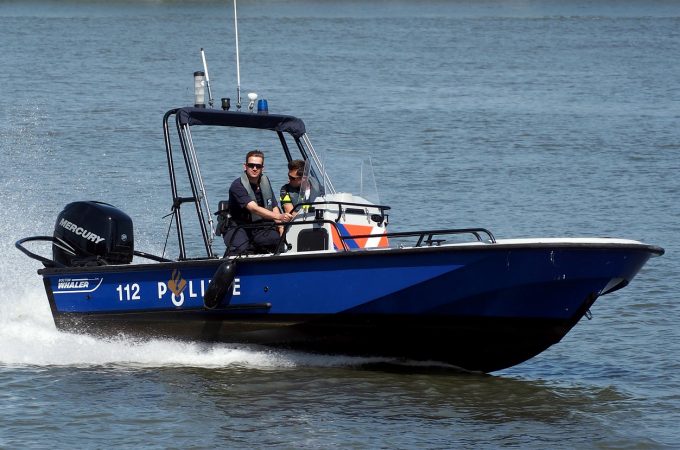
- The words “in armed conflict” clarify that the military operations referred to in this Manual must take place in such context and not in connection with incidents that do not reach the legal threshold of armed conflict (see Section B). Operations for law-enforcement purposes are therefore not included, notwithstanding any use of force in their course. Such operations are normally conducted by police units, which are not considered combatants, unless incorporated into the armed forces.[39] Similar considerations apply to the coast guard.
- When the armed forces undertake operations in support of civil society that are not related to actual − or potential − use of force against an enemy in times of armed conflict, such operations are not considered “military” in the sense of this Manual, although they could be qualified as “military” under national law.
- The phrase “air and missile warfare”, as used in the title of this Manual, adverts to air or missile operations that are specifically related to hostilities. In addition to air or missile combat operations (see Rule 1(c)), air or missile operations include surveillance, weather, reconnaissance, search-and-rescue, transport and other operations that may not be directly related to ongoing hostilities.
- The inclusion of operations “whether in offence or defence” is intended to highlight the fact that an operation’s tactical or operational character has no bearing on the law of international armed conflict applicable to it. Thus, for instance, there is no distinction in the terminology of this Manual between an offensive attack and a defensive counter-attack. For the definition of “attack”, see Rule 1 (e).
- Subject to the relevant rights of Neutrals (see Section X), Rule 1 (b) emphasizes that air or missile operations may take place anywhere. This includes: (i) the airspace above the national territory of all Belligerent Parties; (ii) the airspace above the high seas and above territory not subject to the sovereignty of any State; and (iii) the airspace above the contiguous zones or the EEZ of all States (including Neutrals). The concepts of the EEZ and the continental shelf refer to the exploitation of natural resources. For the purposes of air or missile operations, these zones and areas are international waters and the air above them is international airspace. See also Rule 107 (e) and paragraph 3 of the Commentary on Rule 166.
- Art. 43 (3) of AP/I: “Whenever a Party to a conflict incorporates a paramilitary or armed law enforcement agency into its armed forces it shall so notify the other Parties to the conflict.”
Categories: Section A: Definitions