


U: Enemy Aircraft and Goods on Board on Such Aircraft

[Commentary]


Rule 134 and Rule 135 apply to enemy civilian aircraft (except enemy civilian airliners, dealt with in Rule 62). Rule 136 applies to enemy military, law-enforcement and customs aircraft.

Rule 134

Enemy civilian aircraft and goods on board may be captured as prize on the ground or — when flying outside neutral airspace — be intercepted and ordered to proceed to a reasonably accessible belligerent airfield that is safe for the type of aircraft involved. Prior exercise of inspection is not required.

[Commentary]

  1. Interception is a stage preliminary to inspection and possible capture. As a rule, interception will be necessary for the purpose of verification of the aircraft’s identity. However, if the enemy character of the civilian aircraft has been established by other means, interception may not be necessary. Nor is it necessary in such circumstances to inspect goods on board.
  2. Rule 134 reflects customary international law (see also Rule 49), according to which enemy civilian aircraft “are liable to capture in all circumstances”,[685] unless they come within special categories that are exempt from capture under the law of international armed conflict (see Section K on medical aircraft and Rule 67 on aircraft granted safe conduct).
  3. In this respect, air warfare is like sea warfare and not like land warfare. Whereas in land warfare Belligerent Parties are — other than in exceptional circumstances — not allowed to interfere with private property, in sea warfare enemy civilian vessels can be captured as prize with a view to interfering with the enemy’s trade and lines of commercial communication. The same applies in air warfare, where a civilian aircraft is liable to capture as prize solely on account of its enemy character.
  4. The right of capture applies to enemy civilian aircraft and goods wherever they are on the ground — i.e. if they are encountered on the territory of the captor State, a co-belligerent or the enemy — as long as they are not within neutral territory. Capture is exercised by taking physical control over the aircraft and its cargo.
  5. If encountered in the air, capture of an aircraft is impossible. Therefore, the aircraft must be intercepted and ordered to land in an airfield where capture can be exercised. Rule 134 refers to a “belligerent airfield”, meaning any airfield which is controlled either by the Belligerent Party that effected the capture or by a co-belligerent thereof.
  6. The airfield that the intercepted aircraft is ordered to land in must be “reasonably accessible” and “safe for the type of aircraft involved”. Accordingly, an enemy civilian aircraft may not be ordered or forced to land in an airfield if the aircraft, its crew or its passengers are exposed to any undue risks. This is a logical consequence of the fact that the enemy aircraft does not qualify as a military objective (unless one of the conditions of Rule 27 has been met) but it is merely liable to capture.
  7. Contrary to what is the case for neutral civilian aircraft (see paragraph 2 of the Commentary on Rule 137 (c)), consent is not required to divert an enemy civilian aircraft from its declared destination.
  8. Interception of enemy civilian aircraft for the purpose of the exercise of the right of capture is permissible outside neutral airspace only. Interception of aircraft in neutral airspace is a violation of the Neutral’s territorial sovereignty and is a violation of the prohibition to conduct hostile actions in neutral territory as laid down in Rule 171 (c).
  9. The aircrews of captured enemy civilian aircraft are entitled to POW status under GC/III.[686] Civilian passengers may be detained only if they pose a security threat in accordance with Art. 42[687] and Art. 43 of GC/IV.[688] Otherwise, they must be promptly released.
  10. Capture of enemy civilian aircraft and goods on board is subject to adjudication by a prize court “in order that any neutral claim may be duly heard and determined”.[689]
  11. The prize court is a domestic court of the captor Belligerent Party (usually an admiralty court). An attempt in 1907 to establish an International Prize Court failed.[690]
  1. Art. 52 of the HRAW: “Enemy private aircraft are liable to capture in all circumstances.”
    See also Para. 141 of the SRM/ACS: “Subject to the provisions of paragraph 142, enemy civil aircraft and goods on board such aircraft may be captured outside neutral airspace. Prior exercise of visit and search is not required.”
  2. Art. 4 (A) (5) of GC/III, see fn. 676.
  3. Art. 42 of GC/IV: “The internment or placing in assigned residence of protected persons may be ordered only if the security of the Detaining Power makes it absolutely necessary. If any person, acting through the representatives of the Protecting Power, voluntarily demands internment, and if his situation renders this step necessary, he shall be interned by the Power in whose hands he may be.”
  4. Art. 43 of GC/IV: “Any protected person who has been interned or placed in assigned residence shall be entitled to have such action reconsidered as soon as possible by an appropriate court or administrative board designated by the Detaining Power for that purpose. If the internment or placing in assigned residence is maintained, the court or administrative board shall periodically, and at least twice yearly, give consideration to his or her case, with a view to the favourable amendment of the initial decision, if circumstances permit. Unless the protected persons concerned object, the Detaining Power shall, as rapidly as possible, give the Protecting Power the names of any protected persons who have been interned or subjected to assigned residence, or who have been released from internment or assigned residence. The decisions of the courts or boards mentioned in the first paragraph of the present Article shall also, subject to the same conditions, be notified as rapidly as possible to the Protecting Power.”
  5. Art. 55 of the HRAW: “Capture of an aircraft or of goods on board an aircraft shall be made the subject of prize proceedings, in order that any neutral claim may be duly heard and determined.”
  6. 1907 Hague Convention (XII) relative to the Creation of an International Prize Court, which never entered into force due to insufficient ratifications.

Rule 135

As an exceptional measure, captured enemy civilian aircraft and goods on board may be destroyed when military circumstances preclude taking the aircraft for prize adjudication, provided that all persons on board have first been placed in safety and documents relating to the prize have been preserved.

[Commentary]

  1. According to customary international law, Belligerent Parties are entitled to destroy captured prizes “if sending them in for adjudication would be impossible or would imperil the safety of the belligerent aircraft or the success of the operations in which it is engaged.”[691] Hence, considerations of military necessity may justify the destruction of a captured enemy civilian aircraft and of goods on board such aircraft. However, destruction of this type is only recognized as an exceptional measure and must be clearly distinguished from destruction under the definition of military objectives (see Rule 11 (y) and Section E).
  2. Destruction is permissible only if passengers and crew “have first been placed in safety”. Whether a place is sufficiently safe for those persons is a question of fact and will depend upon the circumstances of each case. Since capture presupposes physical control over the aircraft, it will be exercised on the ground. Therefore, the airfield where the aircraft is captured will not qualify as a sufficiently safe place if it is located within the combat zone or if it is under continuous attacks by the enemy.
  3. If a captured enemy civilian aircraft is destroyed, the captor “must bring the capture before a prize court”.[692] The obligation of preserving the aircraft’s documents is meant to enable the prize court to render its decision on the legality of the capture, as well as the destruction, and on possible neutral claims.
  4. If the prize court rules that capture or destruction was illegal, the neutral owners of the cargo on board the enemy civilian aircraft are entitled to compensation.
  1. Art. 58 of the HRAW: “Private aircraft which are found upon visit and search to be neutral aircraft liable to condemnation upon the ground of unneutral service, or upon the ground that they have no external marks or are bearing false marks, may be destroyed, if sending them in for adjudication would be impossible or would imperil the safety of the belligerent aircraft or the success of the operations in which it is engaged. Apart from the cases mentioned above, a neutral private aircraft must not be destroyed except in the gravest military emergency, which would not justify the officer in command in releasing it or sending it in for adjudication.”
  2. Art. 59 of the HRAW: “Before a neutral private aircraft is destroyed, all persons on board must be placed in safety, and all the papers of the aircraft must be preserved. A captor who has destroyed a neutral private aircraft must bring the capture before the prize court, and must first establish that he was justified in destroying it under Article 58. If he fails to do this, parties interested in the aircraft or its cargo are entitled to compensation. If the capture is held to be invalid, though the act of destruction is held to have been justifiable, compensation must be paid to the parties interested in place of the restitution to which they would have been entitled.”

Rule 136

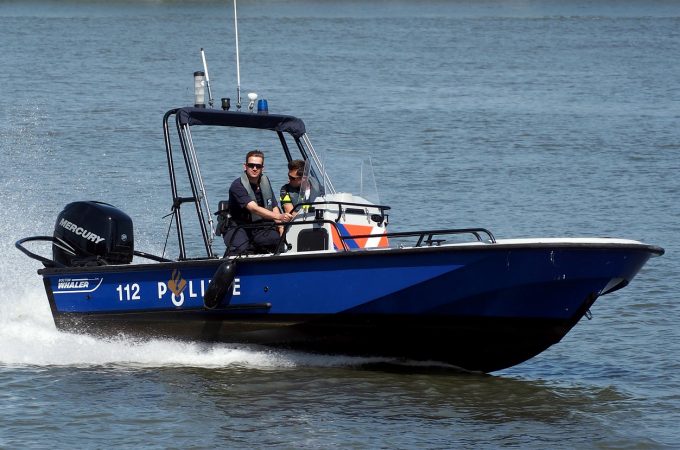
(a) Enemy military, law-enforcement and customs aircraft are booty of war. Prize procedures do not apply to captured enemy military aircraft and other State aircraft, inasmuch as their ownership immediately passes to the captor government by virtue of capture.

[Commentary]

(b) If a military aircraft becomes disabled or experiences technical problems that require it to land in enemy territory, the aircraft may be seized and destroyed or converted for use by the enemy.

[Commentary]

(c)  Captured aircrews of military aircraft covered under this Rule are prisoners of war.

[Commentary]

  1. This Rule is based on Art. 32 of the HRAW
    .[693] In the case of enemy civilian aircraft, the property does not pass to the captor until the prize has been condemned by a prize court. For their part, enemy military aircraft captured on the ground, are no different from other enemy governmental property. All captured enemy governmental property which is movable becomes automatically the property of the captor Belligerent Party as booty of war.
  2. In view of the nature of enemy military aircraft, it is immaterial whether they have been captured after a military engagement or whether they have been forced, by whatever means, to land on the territory of a Belligerent Party. Capture is effected by securing possession of the aircraft. The effect of capture of an enemy military aircraft is the immediate and final transfer of property to the captor Belligerent Party, who is then entitled to deal with the military aircraft as it wishes. Use of the captured aircraft as a military aircraft by the captor Belligerent Party presupposes of course that the aircraft in question meets the requirements laid down in Rule 1 (x).
  3. As regards State aircraft other than military aircraft, it must be recalled (see Commentary on Rule 1 (c)) that there is a distinction between those aircraft which are used for law-enforcement (including police) and customs purposes, on the one hand, and other State aircraft, on the other. According to Art. 5 of the HRAW,[694] State aircraft other than police and customs aircraft are treated on the same footing as “private” (namely civilian) aircraft and, according to Art. 32 of the HRAW, are not subject to confiscation without prize proceedings, i.e. they do not constitute booty of war. The expression in Rule 136 (a) of “other State aircraft” ought to be interpreted as State aircraft other than law-enforcement and customs aircraft. There is no question that the distinction for the purposes of booty of war and prize, made in Art. 5 and in Art. 32 of the HRAW, is still valid today.
  4. Rule 136 (a) uses the somewhat broader term “law-enforcement” in preference to the term “police” (used in Art. 4 of the HRAW).[695]
  1. Art. 32 of the HRAW: “Enemy public aircraft, other than those treated on the same footing as private aircraft, shall be subject to confiscation without prize proceedings.”
  2. Art. 5 of the HRAW, see fn. 110.
  3. Art. 4 of the HRAW, see fn. 109.

The fact that a military aircraft is forced to land in enemy territory, because it has become disabled or because of technical problems, does not alter that aircraft’s nature as booty of war (see Rule 136 (a)).


The military aircrews of military aircraft are combatants and, as such, entitled to POW status. It needs to be observed that, according to Art. 4 A (4) of GC/III,[696] “civilian members of military aircraft crews” are also entitled to POW-status.

  1. Art. 4 (A) (4) of GC/III, see fn. 676.