
Q: Specifics of Air or Missile Operations

Rule 114

In air or missile combat operations, the following acts are examples of perfidy (subject to the definition in Rule 111 (a)):

[Commentary]
  1. The feigning of the status of a protected medical aircraft, in particular by the use of the distinctive emblem or other means of identification reserved for medical aircraft.
  2. [Commentary]
  3. The feigning of the status of a civilian aircraft.
  4. [Commentary]
  5. The feigning of the status of a neutral aircraft.
  6. [Commentary]
  7. The feigning of another protected status.
  8. [Commentary]
  9. The feigning of surrender.
  10. [Commentary]

  1. This Rule highlights acts of perfidy which are particularly apposite to air or missile combat operations. The use of the term “perfidy” is based on the general definition in Rule 111 (a). The main constituent element of perfidy is the intent to betray the confidence of the enemy. Perfidious acts by themselves are not unlawful. Perfidy is only prohibited when linked to the act of killing, injuring (or capturing) an adversary.
  2. The acts listed Rule 114 (a)–(e) are merely examples of perfidy. In other words, the list is not exhaustive.

  1. Conduct covered by Rule 114 (a) only constitutes prohibited perfidy when used as a means to kill or injure (or capture) an adversary.
  2. There are various ways of feigning the status of a medical aircraft (see Section L, in particular Rule 76). One way is when deliberate use is made of signals that, by multilateral treaty — or by a bilateral agreement with the enemy — are reserved for medical aircraft (see Rule 76 (a) or (b)). When an aircraft other than a medical aircraft follows an air route or an air corridor agreed upon between the Belligerent Parties for the exclusive use of medical aircraft, this could also amount to the feigning of the status of a medical aircraft.
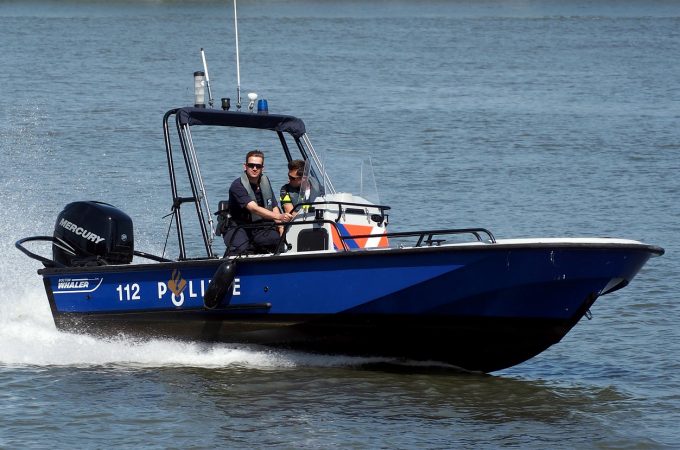
  3. Signals, such as blue flashing lights, are in many States used by police or firefighting services, and could in certain circumstances lead to confusion with medical aircraft. This does not amount to perfidy as long as there is no intent to betray the confidence of the enemy by feigning the status of a medical aircraft.
  4. Rule 114 (a) applies also in non-international armed conflict.

  1. This Rule is based on Art. 37 (1) (c) of AP/I.[642] See also Para. 109 of the SRM/ACS.[643]
  2. Conduct covered by Rule 114 (b) constitutes prohibited perfidy only when used as a means to kill or injure (or capture) an adversary.
  3. It is perfidious for a military aircraft to feign the status of a civilian aircraft. This could, for instance, occur if that military aircraft uses a transponder that on interrogation gives a response indicating that it is a civilian aircraft.
  4. Feigning of civilian status by painting civilian markings on a military aircraft has a superficial similarity to a combatant feigning civilian status by wearing civilian clothing. There is, however, a big difference in that changing the markings on a military aircraft requires a lot more effort and will necessarily be a deliberate act, while soldiers may appear to be in civilian clothing as a result of wear and tear in uniforms, inadequate supplies, etc.
  5. Some air forces employ low-visibility markings for military aircraft, with national colours replaced by a black or grey outline indicating the national marking. This is done for camouflage purposes. Although recourse to such a system of marking will make it more difficult to ascertain the nationality and the military status of the aircraft by visible means, it is not considered feigning of the status of a civilian aircraft. (see paragraph 11 of the Commentary on Rule 1 (x) as well as the Commentary on Rule 116 (e)).
  6. If markings are erased altogether from military aircraft, they are no longer entitled to engage in attacks — or to exercise any other belligerent rights, such as interception (see Rule 17) — in view of the fact that the aircraft no longer meet the definitional requirements of military aircraft (see Rule 1 (x)).
  7. UCAVs feigning the status of civilian UAVs to conduct an attack are acting perfidiously, and the act will be unlawful if it results in killing or injuring (or capturing) an adversary.
  8. UAVs used by the military but feigning civilian status, although used mainly for intelligence gathering purposes, will be deemed to be acting perfidiously if they are used in close conjunction with attacking military units in order to identify a target, designate it, monitor the engagement, or assess the results in order to determine whether a re-attack is necessary. In all such cases, the UAV can be regarded as part of the attacking force.
  9. In non-international armed conflicts, aircraft used by non-State organized armed groups cannot qualify as military aircraft (see paragraph 8 of the Commentary on Rule 1 (x)). Thus, they are technically civilian aircraft. However, if measures are intentionally taken to convince the enemy that they are exclusively dedicated to innocent civilian purposes, an attack by such aircraft will constitute perfidious action and be unlawful if resulting in the killing or injuring (or capturing) of an adversary.
  1. Art. 37 (1) (c) of AP/I, see fn. 614.
  2. Para. 109 of the SRM/ACS: “Military and auxiliary aircraft are prohibited at all times from feigning exempt, civilian or neutral status.”

  1. The prohibition is based on Art. 37 (1) (d) of AP/I.[644] See also Para. 12.3.2 of NWP[645] and Para. 109 of the SRM/ACS.[646]
  2. Conduct covered by Rule 114 (c) constitutes prohibited perfidy only when used as a means to kill or injure (or capture) an adversary.
  3. The core of the prohibition is feigning the status of neutral aircraft by painting the markings of a Neutral on the aircraft of a Belligerent Party.
  4. Feigning of the status of a neutral aircraft could also be done by employing false electronic signals or deceptive radio transmissions.
  5. On the face of it, there is no difference between the feigning of the status of a neutral aircraft and the use of neutral military emblems (see Rule 112 (d)). In actuality, however, there is a difference. Perfidy goes beyond mere use, entailing betrayal of the adversary’s confidence.
  6. Neutrality in the legal sense does not exist in non-international armed conflict. However, it would be perfidious to feign the status of an aircraft from a foreign State not taking part in the hostilities.
  1. Art. 37 (1) (d) of AP/I, see fn. 614.
  2. Para. 12.3.2 of NWP, see fn. 636.
  3. Para. 109 of SRM/ACS, see fn. 643.

  1. Another protected status could be that of an aircraft granted safe conduct (such as cartel aircraft, see Section J (II) and Section J (III)), UN,[647] ICRC, etc.
  2. Conduct covered by Rule 114 (d) constitutes prohibited perfidy only when used as a means to kill or injure (or capture) an adversary.
  3. Rule 114 (d) applies also in non-international armed conflict.
  1. Second sentence of Para. 111 of SRM/ACS: “Perfidious acts include the launching of an attack while feigning: (a) exempt, civilian, neutral or protected United Nations status; (b) surrender or distress by, e.g., sending a distress signal or by the crew taking to life rafts.”

  1. The prohibition is based on Art. 37 (1) (a) of AP/I.[648] See also Para. 12.2 of NWP[649] and Rule 111 (b) of SRM/ACS.[650] Surrender is dealt with extensively in Section S.
  2. Aircrews of a military aircraft wishing to surrender may communicate their intention on a common radio channel such as a distress frequency (see Rule 128). Falsely communicating such intention can amount to perfidious conduct.
  3. In view of the fact that signals such as rocking the aircraft’s wings or lowering the landing gear are not conclusive evidence of an intent to surrender (see paragraph 3 of the Commentary on Rule 128), it is not clear whether the misuse of such signals constitutes perfidy.
  4. Conduct covered by Rule 114 (e) constitutes prohibited perfidy only when used as a means to kill or injure (or capture) an adversary.
  5. Rule 114 (e) applies also in non-international armed conflict.
  1. Art. 37 (1) (a) of AP/I, see fn. 614.
  2. Last sentence of Para. 12.2 of NWP: “Similarly, use of the white flag to gain a military advantage over the enemy is unlawful.”
  3. Second sentence of Para. 111 of the SRM/ACS, see fn. 647.

Rule 115

Irrespective of whether or not they are perfidious, in air or missile combat operations, the following acts are prohibited at all times:

(a) Improper use by aircraft of distress codes, signals or frequencies.

[Commentary]

(b) Use of any aircraft other than a military aircraft as a means of attack.

[Commentary]

  1. Improper use means any use of distress codes, signals or frequencies (as prescribed by a competent international authority) for other than normal purposes.
  2. Improper use of distress signals is in breach of the provisions regulating the use of such signals (see Art. 10 of the 1923 Hague Rules for the Control of Radio Wireless Telegraphy in Time of War).[651] Distress signals must be reserved for their humanitarian purposes.
  3. The improper use by aircraft of distress codes must be clearly distinguished from situations in which the aircraft feigns distress through other means. For example, an aircraft may simulate distress by maneuvering in a way that suggests that it has been damaged in order to induce the enemy to discontinue an attack or to gain some other military advantage. As for surrender, see Section S.
  4. However, if an aircraft simulates a situation of distress in order to create the false impression that airborne troops descending from it are parachutists from an aircraft in distress (see Section T), this could amount to prohibited perfidy if it leads to killing, injuring (or capturing) an adversary.
  5. IFF codes are not distress codes. The false use of the enemy’s IFF Codes is not prohibited (see Rule 116 (c)).
  6. Rule 115 (a) applies also in non-international armed conflict.
  1. Art. 10 of the 1923 Hague Rules for the Control of Radio in Time of War: “The perversion of radio distress signals and distress messages prescribed by international conventions to other than their normal and legitimate purposes constitutes a violation of the laws of war and renders the perpetrator personally responsible under international law.”

  1. Under Rule 17 (a), only military aircraft are entitled to engage in attacks. The present Rule refers to the use of an aircraft, other than a military aircraft, as a “means of attack”.
  2. Using a manned aircraft as a weapon, would usually mean a suicide mission. Whereas suicide attacks by military aircraft are not unlawful per se, a suicide attack carried out by an aircraft other than a military aircraft (in particular a hijacked civilian airliner with passengers on board) would be unlawful.
  3. On September 11, 2001, terrorists attacked the World Trade Center in New York and other targets using hijacked civilian airliners as weapons. Using as a means of attack a civilian aircraft (or any other protected aircraft) is in breach of the law of international armed conflict.
  4. Rule 115 (b) does not apply to non-international armed conflict (see paragraph 7 of the Commentary on Rule 17).

Rule 116

In air or missile combat operations, the following are examples of lawful ruses of war:

[Commentary]

(a) Mock operations.

[Commentary]

(b) Disinformation.

[Commentary]

(c) False military codes and false electronic, optical or acoustic means to deceive the enemy (provided that they do not consist of distress signals, do not include protected codes, and do not convey the wrong impression of surrender).

[Commentary]

(d) Use of decoys and dummy-construction of aircraft and hangars.

[Commentary]

(e) Use of camouflage.

[Commentary]

  1. The examples are based on Art. 37 (2) of AP/I.[652] See also Para. 12.1.1. of NWP.[653]
  2. Rule 116 applies also in non-international armed conflict.
  1. Art. 37 (2) of AP/I, see fn. 641.
  2. Para. 12.1.1 of NWP: “Stratagems and ruses of war permitted in armed conflict include such deceptions as camouflage; deceptive lightning; dummy ships and other armament; decoys; simulated forces; feigned attacks and withdrawals; ambushes; false intelligence information; electronic deceptions; and utilization of enemy codes, passwords and countersigns.”

  1. Mock operations, as lawful ruses of war, are illustrated by feint attacks leading the enemy to believe that a heavy attack would be delivered against a particular target and thereby inducing it to commit its forces to the defence of that target, while the main blow is delivered at another target which has been left more thinly defended.
  2. An example from history is the Allied air attacks on targets in the Pas de Calais area during the weeks preceding D-Day in 1944. The air attacks convinced Nazi Germany that the invasion would come in that area, and not in Normandy.
  3. Another example is that of moving an aircraft carrier to a particular area, in order to make the enemy believe that an air strike will be delivered from the air carrier. In fact, the main target of the attack may be located in an area beyond the flight capability of the carrier’s aircraft.
  4. Simulated attacks may also be used as lawful ruses of war to entice the enemy to activate its air defence systems, thus providing valuable information about those systems that can be used to facilitate a real attack later. While this is different from mock operations in the classic sense, it has a common element in that it presents the enemy with a false appearance of what is actually going on, thereby lawfully gaining a military advantage.

  1. Disinformation consists of information that is either false or which is designed to lead the enemy to draw incorrect conclusions. Misinformation is mentioned in Art. 37 (2) of AP/I[654] as a lawful ruse of war. Misinformation is a wider term, including information that is incorrect objectively, whereas disinformation is confined to the situation where only the person conveying it is aware of the fact that the information is false. Even disinformation, which is obviously based on deception, is a lawful ruse of war.
  2. An example of use of disinformation is an attempt to induce the enemy to surrender by creating the false impression that it is surrounded, or that massive air attacks are impending whereas no such attack is planned, or even feasible. An historical example relates to WWII. When Belligerent Parties captured enemy aircraft, they gave them the proper new nationality markings, yet employed them in such a manner that the enemy was misled to consider them friendly military aircraft because of their silhouette. In such cases, the captured aircraft were used to great advantage by mixing them with enemy night bombers returning to base from bombing missions, and attacking the enemy airbases that were lit up in order to receive the returning bombers.
  3. False information that suggests civilian, neutral or other protected status is not lawful (see Rule 114).
  1. Art. 37 (2) of AP/I, see fn. 641.

  1. The use of false military codes and false electronic, optical or acoustic means to deceive the enemy can be seen as a special case of lawful disinformation.
  2. An example might be the use of the enemy’s IFF codes when responding to an IFF interrogation (see Commentary on Rule 40 (f)), thus falsely indicating friendly status as seen from the enemy’s perspective. Such false response is not to be equated to wearing enemy uniform (which is prohibited, see Rule 112 (c)). The correct analogy would be that of a patrol (which is a lawful ruse of war) using the enemy’s password to avoid being fired upon when summoned by an enemy sentry.
  3. Another example of a lawful ruse of war consists of a Belligerent Party’s creating false return on enemy radar, giving the impression of a large formation of approaching aircraft, thus confusing enemy defences. This was done during WWII by dropping aluminium strips (“windows”), and is today done by electronic means.

  1. Unmanned decoys may be used to simulate manned military aircraft by creating an unusually large radar return or in other ways simulating a larger aircraft.
  2. Missile decoys may be used to mislead anti-missile defences. Due to their velocity, they can create destruction when they hit the ground, although they do not contain warheads with explosives.
  3. Dummy construction was used during WWII by Belligerents Parties, in order to simulate objects such as military installations, parked military aircraft or tanks.
  4. Dummy construction that is intended to attract attacks from the enemy must, to the extent feasible, not be located within or near densely populated areas (see Rule 42).

  1. It is permissible to paint military aircraft with camouflage colours, as long as the military markings of the aircraft are there, even though their visibility is impaired (see paragraphs 4 and 5 of the Commentary on Rule 114 (b) as well as paragraph 14 of the Commentary on Rule 11 (x)).
  2. Use of camouflage includes the reduction of electronic, acoustic or infrared signature of a military aircraft, in order to make it “invisible” or “inaudible” to other sensors than the human eye.
  3. It has not been considered unlawful to camouflage ground installations at military airfields, like hangars and workshops, to look like unspecified civilian buildings.

Rule 117

Aircrews conducting combat operations on land or on water — outside their aircraft — must distinguish themselves from the civilian population, as required by the law of interna-tional armed conflict.

[Commentary]

  1. The HRAW required in Art. 15 that crews of military aircraft bear a fixed distinctive emblem.[655] However, State practice clearly shows that aircrews of military aircraft in flight are not required to wear uniform as long as they are in the aircraft, since the necessary markings of the military aircraft are sufficient indication of combatant status, thus distinguishing the military aircraft and its crew from civilian aircraft and civilian personnel.
  2. The main thrust of Art. 15 of the HRAW was, however, that the crews must be recognizable at a distance in the event of the crew finding themselves separated from the aircraft. This provision is supported by subsequent State practice. If the aircrews leave their aircraft, they are in no different position from soldiers or sailors operating on land or on water. They must distinguish themselves from civilians as required by the law of international armed conflict, normally by wearing military uniform.
  3. If aircrews do not observe Rule 117, this does not alter their status as combatants but makes it more difficult for the enemy to identify their status and increases the risk that they may be misidentified as spies (see Section R and Rule 120). It is also possible that a Belligerent Party might consider them to be “unprivileged belligerents” (or “unlawful combatants”, see paragraph 4 of the Commentary on Rule 10 (b) (i) and paragraph 4 of the Commentary on the chapeau to Rule 111 (b)).
  4. There is no State practice indicating how Rule 117 is applied, if at all, in a non-international armed conflict.
  1. Art. 15 of the HRAW: “Members of the crew of a military aircraft shall wear a fixed distinctive emblem of such character as to be recognizable at a distance in case they become separated from their aircraft.”